.png?width=175&height=50&name=BF_Wordmark_Momentum_DarkBlue%20(1).png)
.png?width=670&height=447&name=Designer%20(3).png)
Overview
Rust is not a normal condition in a properly maintained spa. When it does appear, it’s typically the result of metals in your spa being exposed to something corrosive, the introduction of source water that is heavy in metal content, or water that is out of balance, particularly in pH.
Most rust issues begin either from metals entering the water during filling or from conditions that allow corrosion of metal components over time. Fortunately, with a few key adjustments and proper maintenance, rust can usually be prevented and often corrected early.
Common Causes of Rust in a Spa
Rust can appear in several places, including around jets, fittings, waterlines, or on nearby components. The most common causes include:
- Metals in source water such as iron or copper, often found in well water or certain municipal systems
- Low pH or low alkalinity, which creates acidic water that can corrode metal components
- Improper chemical balance, allowing water to become aggressive and damaging
- Chemical exposure, misuse, or overuse, especially highly concentrated sanitizers, sanitizers stored nearby and becoming airborne, or improper mixing
- Persistent moisture under the cover, especially when combined with poor ventilation
Even small amounts of metal in the water can eventually oxidize and appear as rust or staining when conditions allow.
Step-by-Step: How to Prevent Rust
Maintain Balanced Water Chemistry.png?width=317&height=476&name=Designer%20(6).png)
Keeping water balanced is the most effective way to prevent rust.
- Maintain pH between 7.4–7.6
- Keep total alkalinity within the recommended range
- Maintain proper sanitizer levels consistently
Balanced water reduces the likelihood of corrosion and protects both surfaces and internal components.
Use a Stain and Scale Control Product
At startup and regularly during use, add a stain and scale control product.
These products:
- Bind to metals like iron and copper
- Help prevent them from oxidizing and forming stains or rust
- Keep metals suspended so they can be filtered out
This is especially important if you are using well water or have experienced staining in the past.
Avoid Harsh Chemical Conditions
Extremely high sanitizer levels or improper chemical additions can increase corrosion risk.
- Avoid allowing chlorine or bromine levels to spike too high
- Add granular chemicals with pumps running to fully dissolve them
- Follow manufacturer dosing recommendations carefully
Consistent, measured dosing protects spa materials over time.
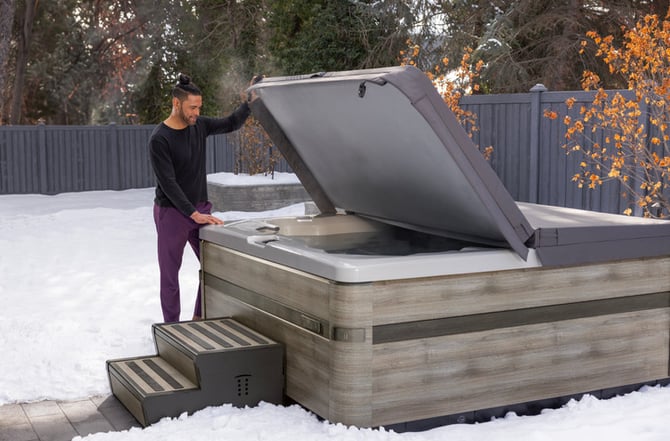
Improve Cover Ventilation
Moisture and chemical vapors under the spa cover can contribute to corrosion.
- Open the cover periodically to release built‑up gases
- Ensure the cover is in good condition and not trapping excessive moisture
This helps protect exposed hardware and fittings.
Step-by-Step: How to Treat Rust or Staining
Step 1: Identify the Source
Determine whether the rust is:
- A surface stain in the shell or around fittings
- Corrosion on metal components
- Caused by incoming water (metals)
Addressing the source prevents the issue from returning.
Step 2: Adjust Water Balance
Test and correct:
- pH
- Alkalinity
- Sanitizer levels
If water is aggressive (low pH), correcting it immediately helps stop further corrosion.
Step 3: Apply a Metal Control Treatment
Add a stain and scale or metal control product according to label directions.
This helps:
- Neutralize dissolved metals
- Prevent further oxidation
- Improve the effectiveness of cleaning treatments
Step 4: Clean Affected Surfaces
For light staining:
- Use a spa‑approved surface cleaner/rubbing compound and a non‑abrasive sponge
- Gently remove visible marks
Avoid harsh scrubbing or abrasive tools, as these can damage the acrylic surface.
Step 5: Filter and Monitor
Run filtration cycles continuously after treatment to help remove suspended particles. Monitor water chemistry over the next several days to ensure balance is maintained and staining does not return.
When to Drain and Refill
If rust staining is widespread or persistent:
- Drain the spa
- Refill with fresh water
- Add stain and scale control immediately
- Rebalance from the start
This resets water conditions and removes excess metals from the system.
What to Expect After Fix
Once water is balanced and metals are controlled:
- Rust staining should fade or stop progressing
- Surfaces will remain clean with normal maintenance
- Water will be easier to manage long-term
Consistent care helps prevent recurrence.
If the Issue Continues
If rust or staining keeps returning:
- Test your source water for metals
- Confirm proper use of metal control products
- Review recent chemical usage and balance history
Your authorized Bullfrog Spas dealer can assist with professional water testing and recommend targeted treatments if needed.
Tips to Prevent Rust Long-Term
- Always add stain and scale control at each fresh fill
- Test water regularly and adjust promptly
- Avoid letting pH drop below recommended range
- Maintain consistent sanitizer levels
- Monitor for early signs of staining and address quickly
Confidence in Water and Surface Care
Bullfrog Spas are designed with high‑quality materials that resist everyday wear. With proper water balance and metal control, rust and staining are easily preventable—helping your spa look and perform like new for years to come.